Çalışma Saatlerimiz
Hafta içi: 09:30–20:00
Cumartesi: 09:30–20:00
Pazar: Kapalı
Working Hours
Weekdays: 09:30–20:00
Saturday: 09:30–20:00
Sunday: Closed
For patients who feel anxious about dental treatment or need extensive care, one question often comes up: what is the difference between dental sedation and general anaesthesia? Both approaches may be considered in selected circumstances, but they are not interchangeable. The right option depends on the proposed dental treatment, medical history and an individual assessment by the dental and anaesthesia teams.
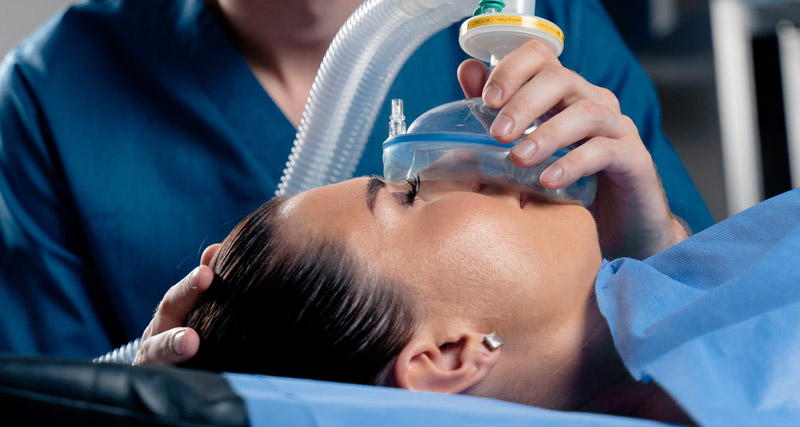
Sedation involves medicines that reduce anxiety and awareness to varying degrees. Clinicians distinguish between minimal, moderate and deep sedation. During lighter levels, patients can usually respond to instructions. During deep sedation, responsiveness is reduced and assistance with breathing may be needed. It is therefore misleading to suggest that every patient receiving sedation remains fully awake.
General anaesthesia produces a controlled state of unconsciousness. The patient does not respond to verbal instructions, and the anaesthesia team may need to manage the airway and support breathing. It requires appropriate personnel, facilities and monitoring. General anaesthesia is not automatically the better choice for an anxious patient.
| Consideration | Dental sedation | General anaesthesia |
|---|---|---|
| Awareness | Varies with the depth of sedation | Controlled unconsciousness |
| Response to instructions | Usually retained in lighter sedation; reduced in deep sedation | Absent during anaesthesia |
| Breathing | Support may be needed, particularly with deep sedation | Airway management and breathing support may be required |
| Typical decision factors | Anxiety, cooperation, medical risk and procedure | Complexity or inability to complete treatment using other appropriate approaches |
| Recovery | Depends on medicines and sedation depth | Depends on the anaesthetic and the procedure |
Sedation may be considered when a patient has substantial dental anxiety, a pronounced gag reflex or difficulty tolerating treatment. However, an anxious patient does not automatically need medication. Clear communication, behavioural strategies and local anaesthesia may be appropriate for many people. A clinician should discuss the least invasive approach likely to allow safe, effective care.
General anaesthesia may be considered for selected complex procedures, extensive treatment needs or situations where treatment cannot reasonably be completed with other methods. Decisions involving children or people with additional support needs require a careful review of the individual situation and alternatives. It is not routinely required for all implant treatments or dental extractions.
The team may review your general health, previous anaesthetic experiences, allergies, medications and any heart or breathing conditions. Tell the clinician about snoring or suspected sleep apnoea. Depending on your medical background and the planned procedure, additional assessment may be necessary.
Follow the individual fasting and medication instructions you receive from the treating team. Do not rely on general online advice to decide whether to stop medicines or how long to fast.
Sedation and pain relief are different. Local anaesthetic is often used alongside sedation to numb the area being treated. Pain control should be discussed as part of the treatment plan. Some discomfort after treatment may relate to the dental procedure rather than the sedation technique.
Before discharge, the team checks that recovery criteria have been met. Following sedation or general anaesthesia, you may need an accompanying adult and may be told to avoid driving, alcohol or important decisions for a specified period. The exact advice depends on the medicines used and your individual recovery.
Dentadent in Bakırköy, Istanbul provides information about dental treatment under sedation and general anaesthesia. The hospital describes an operating theatre facility and anaesthesiologist involvement. For patients travelling from abroad, a preliminary conversation can help identify the information needed before a clinical assessment, but suitability cannot be confirmed by an online article alone. Contact Dentadent to discuss the next steps.
Not necessarily. Awareness varies with sedation depth, while general anaesthesia involves controlled unconsciousness.
Neither method is universally safer for everyone. Safety depends on appropriate patient selection, facilities, trained personnel and monitoring.
Many implant procedures can be performed with local anaesthesia. Additional sedation or general anaesthesia is considered according to individual needs.
Travel planning must account for your recovery, potential escort requirements and the dental procedure. Follow the treating team’s discharge and travel advice.
Yes. Tell the anaesthesia team about diagnosed or suspected sleep apnoea or other breathing concerns.
