Çalışma Saatlerimiz
Hafta içi: 09:30–20:00
Cumartesi: 09:30–20:00
Pazar: Kapalı
Working Hours
Weekdays: 09:30–20:00
Saturday: 09:30–20:00
Sunday: Closed
Do you need a crown after root canal treatment? Not always. The most suitable final restoration depends on the tooth’s location, how much healthy tooth structure remains, the forces placed on it when chewing, and whether cracks or large existing fillings are present. Some teeth can be restored with a bonded filling; others benefit from an onlay or full-coverage crown.
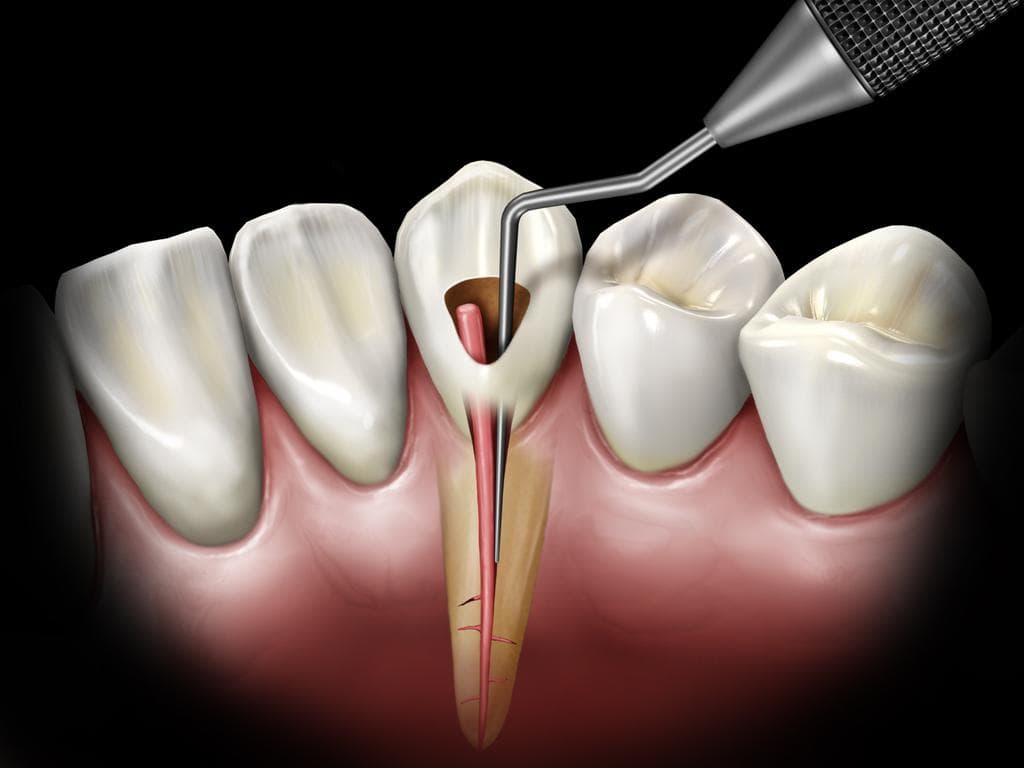
During root canal treatment, inflamed or infected tissue is removed from inside the tooth and its canals are cleaned and sealed. A final restoration then helps protect the tooth against leakage and restores its function. The long-term outlook is influenced by both the quality of the root canal treatment and the restoration placed afterwards.
Root canal treatment itself is not the only reason a tooth may be at risk of fracture. Extensive decay, previous large fillings, cracks and the amount of lost tooth structure are also important.
Back teeth carry substantial chewing loads. If a molar or premolar has lost significant structure or its cusps are vulnerable, a crown or a cusp-covering onlay may be recommended to reduce the risk of fracture.
An incisor or canine with sufficient remaining healthy structure may be restored with a composite filling. A crown can still be considered when there has been substantial breakage, an extensive previous restoration or another clinical concern. Front teeth do not automatically require crowns after root canal treatment.
| Option | When it may be considered | Key consideration |
|---|---|---|
| Composite filling | Limited structural loss with good remaining tooth support | Can preserve tooth tissue, but may not protect heavily damaged cusps. |
| Onlay or overlay | Loss affecting the chewing surface or one or more cusps | Can cover weakened areas while retaining selected healthy tooth structure. |
| Full-coverage crown | Extensive structural loss or high risk of fracture | Provides broader coverage but may require more tooth preparation. |
Choosing between these options requires a clinical examination, assessment of the bite and, when needed, dental X-rays. The ideal choice is not determined by the treatment name alone.
Unnecessary delays should be avoided because a temporary filling is not intended to provide permanent protection. The timing depends on the tooth, the completion of treatment and your dentist’s instructions. Until the definitive restoration is placed, avoid chewing very hard foods on the treated tooth when advised to do so.
Not necessarily. Some teeth remain stable with an appropriate filling. However, a tooth with extensive damage—particularly a back tooth—may be more vulnerable without a restoration designed to protect weakened areas. Your dentist can assess the remaining tooth structure and explain your individual risks.
No. A post may sometimes be used to help retain a core when there is insufficient structure for the final restoration. A post does not automatically strengthen a tooth and may not be suitable in every case.
Yes. In selected cases, particularly where sufficient tooth structure remains, a bonded filling may be appropriate.
No. The decision to provide a crown and the choice of crown material are separate considerations. Your dentist will assess function, tooth structure and aesthetic requirements.
Follow your treating dentist’s advice and be cautious with hard or sticky foods, especially when a temporary filling is in place.
Many such teeth function for years with good care and a suitable final restoration. Individual outcomes vary and no lifetime result can be guaranteed.
At Dentadent in Bakırköy, Istanbul, the decision between a filling, onlay and crown is based on the individual tooth and clinical assessment. International patients can explore the clinic’s English-language dental services and contact Dentadent to discuss an assessment and treatment planning.
Medical note: This article is for general information and does not replace a dental examination. Clinical review by the relevant dental specialist is recommended before publication.
