Çalışma Saatlerimiz
Hafta içi: 09:30–20:00
Cumartesi: 09:30–20:00
Pazar: Kapalı
Working Hours
Weekdays: 09:30–20:00
Saturday: 09:30–20:00
Sunday: Closed
Have you been told you do not have enough jawbone for a dental implant? Low bone volume does not automatically rule out implant treatment. Depending on the site and your overall oral health, bone grafting or another carefully planned approach may be considered.
This guide explains bone grafting for dental implants, why it may be needed and what international patients considering implant treatment in Istanbul should discuss with their dental team. For the broader procedure, see dental implant treatment at Dentadent.
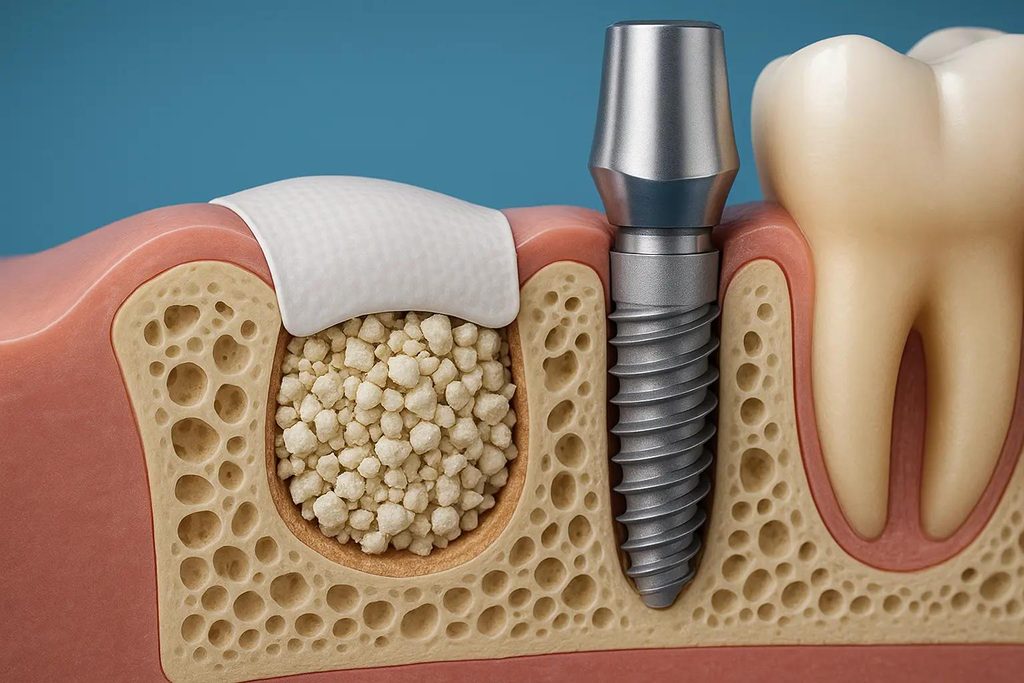
A dental implant is placed within the jawbone and needs adequate initial stability and a suitable environment for healing. Your dentist evaluates not only bone height but also width, quality, gum health and the position of nearby structures such as nerves and sinuses. Having “thin bone” on an X-ray does not by itself determine the treatment plan.
The assessment begins with your medical and dental history, oral examination and review of gum health and bite. Depending on the case, X-rays or cone-beam CT (CBCT) may help assess the implant site in three dimensions. CBCT is not necessary for every patient. The team recommends imaging according to individual clinical needs.
Bone grafting is a surgical approach designed to support bone regeneration or preserve and rebuild volume at a planned implant site. A graft material may serve as a framework into which new bone can develop as the area heals. Outcomes and suitable techniques vary with the size of the defect, location, overall health and surgical plan.
A protective membrane may also be used in selected cases. Ask your clinician which material is proposed and why. If you have religious, ethical or personal concerns about animal-derived materials, discuss these before consenting to treatment.
A bone graft is a broad category of procedures used to manage missing or deficient bone. A sinus lift is a specific procedure used in the posterior upper jaw to create more space for implant-supporting bone beneath the maxillary sinus. A sinus lift may involve bone graft material. Not every patient who needs a graft requires a sinus lift.
Sometimes. If enough native bone remains to stabilise the implant, grafting and implant placement may be possible in one procedure. Where bone loss is more extensive, grafting may be performed first, followed by a healing period and later implant placement. The sequence is decided after clinical and radiographic assessment.
Gum healing in the first days or weeks is different from maturation of the underlying grafted bone. Bone development is generally monitored over several months. The timeline may be longer for larger grafts or sinus lift procedures and should not be assumed from an advertised “same-day teeth” itinerary. Your clinical team should explain the stages and reassessment points for your case.
Swelling, discomfort, bruising and bleeding are possible after surgery. Infection, graft exposure or inadequate bone formation can also occur. In certain locations, nerve or sinus-related complications may be relevant. Smoking and some uncontrolled health conditions can adversely affect healing. A consultation should include your individual risks, expected benefits and alternatives.
Potentially. Some patients may be suitable for alternative implant dimensions, positions or prosthetic approaches, while others may benefit from a graft. These are case-dependent decisions, not universal shortcuts. The goal is a safe long-term treatment plan rather than avoiding or performing grafting at all costs.
If you live in the UK or elsewhere in Europe, bone grafting may mean more than one visit to Turkey. Ask whether grafting and implant placement are expected to be simultaneous or staged, how healing will be reviewed, and what follow-up arrangements will be available after you return home. A reliable plan should allow for individual healing and unexpected changes, rather than promise a fixed treatment duration before examination.
At Dentadent in Bakırköy, Istanbul, treatment suitability is assessed through examination and imaging when indicated. You can contact Dentadent to ask about an implant assessment and the information needed before planning travel.
Sometimes. The options depend on how much bone remains, its location, your health and the planned restoration.
No. Many implant plans do not require bone grafting when the existing bone and surrounding tissues are suitable.
Not necessarily. Some sinus lift procedures can be performed alongside implant placement; other cases need staged treatment.
There is no reliable universal length of stay. Ask your clinician to explain the expected surgical visits, review appointments and healing period after assessment.
No surgical treatment is risk-free or guaranteed. Graft healing and the amount of new bone formed vary among patients.
This page offers general educational information, not personal medical advice. Clinical review by a qualified dentist is required before publication and treatment decisions must follow examination.
